

Thai is everywhere now. On your screen, in your playlist, even at your favourite supper spot.
More Singaporean millennials are picking up the Thai language, not for school or work, but for culture, connection and curiosity.
From binge-worthy dramas to weekend getaways in Bangkok, the reasons go beyond tourism. Thai is fast becoming the “third language” of lifestyle, and this trend shows no signs of slowing.
Here is why millennials in Singapore are embracing Thai like never before.
Pop Culture and the Thai Influence in Singapore
Turn on Netflix, scroll through TikTok, or browse YouTube, and Thai content is just a tap away.
From romantic dramas like 2gether: The Series to cult-favourite horror films like Pee Mak, Thai entertainment has carved out a loyal following in Singapore, especially among millennials.
These shows do more than entertain, they spark curiosity about Thai expressions, cultural nuances and everyday slang.
Music plays a big part, too. Thai pop and indie tracks frequently make their way into Spotify playlists and social reels. Artists like MILLI and Billkin have fanbases in Singapore, and many fans find themselves memorising lyrics and eventually Googling translations.
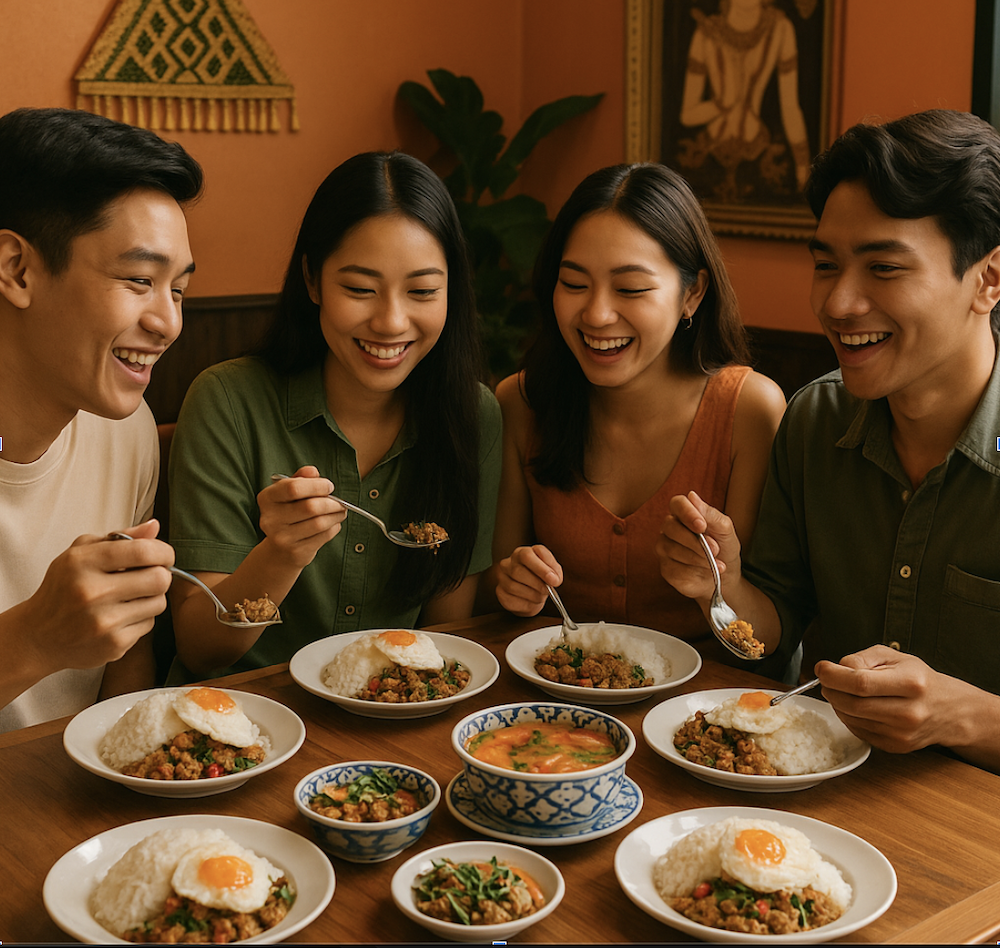
Food culture adds another layer. Thai restaurants, food courts and supper spots are often packed, not just for the dishes, but for the vibe.
Dishes like pad krapow (basil chicken), tom yum goong (spicy shrimp soup), green curry, and mango sticky rice are household names. Menus peppered with Thai script become mini language lessons. Some diners even ask how to pronounce the names correctly, which is a small step into language learning.
Pop culture is doing the heavy lifting. It makes the Thai language feel accessible, stylish and fun, not foreign. For many Singaporeans, it starts with a subtitle or a dish, and ends with a desire to speak like a native.
Travel, Lifestyle, and Cross-Cultural Curiosity
Ask any Singaporean about their travel bucket list, and Thailand is likely on it or already ticked off. Flights are short, costs are low, and the value is hard to beat.
A weekend in Bangkok or a beach escape in Krabi can cost less than a shopping trip in town. Budget airlines, affordable accommodation and street food that costs less than a kopi make Thailand a go-to destination for millennials looking for a quick recharge.
The variety is another draw. Bangkok offers everything from shopping at Chatuchak Weekend Market to rooftop dining at Vertigo. Chiang Mai appeals to those seeking cooler weather, lush mountains and quiet temples. Phuket and Krabi offer island hopping, diving and stunning beaches. Places like Pai, Hua Hin and Koh Samui are perfect for slow travellers looking for a digital detox or remote work retreat.
But it is more than affordability and variety. Thailand offers a lifestyle that blends tradition and modernity. From street markets to yoga retreats, local cafes to motorbike road trips, the Thai experience is diverse, colourful and inviting. Each visit brings deeper appreciation for local customs, everyday interactions and, inevitably, the language.
Many Singaporeans return from these trips wanting to do more than just order food or ask for directions. They want to connect with locals, understand conversations and engage more meaningfully. Language becomes the natural next step.
Learning Thai, for this group, is not about exams or certifications. It is about cultural access. Understanding the script on temple signs, catching jokes in local comedies or simply negotiating better at a weekend market are the real rewards.
Career Opportunities from Knowing Thai
While passion and curiosity often drive language learning, practical value still matters. For Singaporean millennials, learning Thai also opens doors in the professional world.
As Southeast Asia becomes increasingly interconnected, multilingual talent stands out. Thai, in particular, offers an edge across several sectors that already have strong ties with Thailand.
Here are some real-world opportunities where Thai language skills can set you apart:
1. Tourism and Hospitality
Singaporeans with Thai language skills are highly sought after by travel agencies, hotels and regional airlines.
With Thailand remaining one of the top travel destinations in Asia, companies look for staff who can communicate with Thai partners, coordinate group travel or even host Thai-speaking tourists in Singapore. Bilingualism adds credibility and efficiency in cross-border operations.
2. E-commerce and Digital Marketing
Thai consumers are increasingly buying from international platforms, and regional e-commerce brands are targeting Thai markets with localised campaigns.
Knowing the language allows professionals to conduct market research, manage local influencer partnerships and write culturally appropriate content. Whether in SEO, UX writing or social media marketing, Thai fluency offers a major advantage.
3. Regional Business Development
Many Thai companies are expanding into ASEAN markets, including Singapore. Professionals in sales, business development and client management who can converse in Thai often act as cultural bridges.
From closing deals to managing relationships, Thai speakers help reduce friction and increase trust in regional collaborations.
4. Education and Language Services
There is a rising demand for Thai tutors, translators and interpreters in Singapore. This includes both informal tutoring and professional roles. Interpreters are needed in legal, healthcare and media settings.
Some even work remotely, offering services to global clients who need Thai-English support.
5. Creative and Media Industries
Content creators, journalists and producers fluent in Thai gain access to original sources, stories and trends before they hit mainstream. This is useful in journalism, entertainment and research-heavy roles.
Whether reviewing Thai films, profiling Thai entrepreneurs or translating scripts, language skill brings authenticity and depth.
How Social Media Shapes Learning Habits
For Singaporean millennials, Thai is now a swipe away. Social media makes learning feel less like study and more like a lifestyle.
- Follow Thai Creators Like @thaispeak and @ploymalisa
These TikTok creators break down Thai phrases, pronunciation and everyday slang in under a minute. Their content is easy to follow and fits right into daily scrolling. - Watch Vloggers Like GoyNattyDream and Bie The Ska
Popular Thai YouTubers like GoyNattyDream mix comedy with real conversations, while Bie The Ska uses sketches that are great for picking up natural dialogue and tone. - Join Language Learning Groups
Telegram and Discord channels offer vocabulary tips, Q&As and language swaps with other learners. Some groups even host weekly speaking sessions. - Use Subtitled Reels and Shorts
Thai drama clips and lifestyle vlogs with English or Thai subtitles help train your ear and expand your vocabulary quickly.
Social media keeps Thai close and accessible. It blends language exposure into your everyday feed, without the pressure of formal study.
Where to Start Your Thai Learning Journey
Getting started with Thai can be straightforward if you choose the right method for your lifestyle.
Whether you prefer a classroom setting or learning on the go, there are reliable ways to build a strong foundation and stay consistent.
Take a Structured Thai Course
Many young Singaporeans are starting with structured Thai language courses in Singapore that combine pop culture appeal with practical fluency goals.
These courses often include native instructors, group discussions and conversational practice that is relevant to real-life situations such as travel or social settings.
Structured learning helps build confidence in speaking and listening.
Learn with Language Apps
Language learning apps like Duolingo, Ling and Memrise are useful for beginners who prefer flexible and interactive tools. These apps provide structured lessons in vocabulary, grammar and pronunciation.
Most feature daily goals, quizzes and voice input to reinforce memory, making them ideal for building a habit of daily learning.
Use Thai Media for Immersion
Thai dramas, variety shows and YouTube vlogs provide natural listening exposure and cultural insight. Starting with English subtitles helps learners connect phrases to context.
Over time, switching to Thai subtitles or watching without any support builds confidence in understanding tone, rhythm and everyday language used by native speakers.
Join a Language Exchange
Language exchange platforms such as Tandem and HelloTalk connect you with Thai speakers interested in practising English or Mandarin. These exchanges offer real-time messaging, voice chats and cultural exchange.
Practising with a native speaker helps develop fluency, improve pronunciation and gives learners a chance to use Thai in meaningful conversations.
Study with Books and Flashcards
Beginner-friendly books like Thai for Beginners by Benjawan Becker provide clear explanations of sentence structures, common vocabulary and grammar rules. Flashcard systems like Anki reinforce memory through spaced repetition.
This combination is especially helpful for learners who prefer a more traditional and self-paced learning approach without screens.
Conclusion
For many Singaporean millennials, learning Thai is more than a hobby. It reflects a lifestyle shift driven by pop culture, travel and regional connection.
Thai is no longer just heard in dramas or on holidays. It is being learned for everyday use.
With apps, media and modern courses, the language feels accessible and relevant. This trend shows how language learning today is shaped by personal interests, not just academic goals.
Thai is fast becoming a bridge between cultures, experiences and communities.