


Families are often curious about the Montessori Method of education, which is very popular around the globe. What is it exactly, and how does it foster a child’s development, outlook and well-being?
Overview
In 1907, Maria Montessori, an Italian physician, opened her first school based on an educational model that places importance on natural child development, and the guiding of such growth through an environment that is conducive to the child’s learning. Broadly speaking, the Montessori Method encompasses a holistic approach with the primary goal of helping each child reach their full potential in all areas of life. Activities promote the development of social skills, emotional growth and physical coordination, as well as cognitive preparation for future leaning.
As there is a belief that children learn best by doing, Montessori classrooms are open environments equipped with ‘didactic’ materials, which involve sensory experiences. The children are free to pursue a range of activities and thus leverage their natural tendencies to learn; this later leads to reading, writing, advanced mathematics, problem solving, geography, science and cultural studies. Visual arts, music and movement are interwoven throughout the days’ activities.
Teachers play the roles of guide, demonstrating the use of learning materials, and observer, acting as a link between the children, suitable materials and their immediate surroundings.
Early childhood (3 to 6 years) classrooms are the most common age range found in Montessori schools but the curriculum can extend to primary and secondary levels. In Bangkok, there are several schools with either full or partial adoption of the Montessori approach at the pre-school and primary school levels; they are also either standalone institutions or part of a larger international school. These include Montessori Academy Bangkok International School, Modern Montessori International Pre-school, International Montessori Center, John Wyatt Montessori, Prep International Kindergarten and Ekamai International School.
A Unique Approach
Montessori early childhood programmes foster the development of trust and assist in the natural development of the child. “Young learners up to the age of five go through specific sensitive periods, where language, physical movement, order, refinement of the senses and social behaviour fall in critical periods of development,” explains Serene Jiratanan, School Director and Principal of Montessori Academy Bangkok International School (MABIS), a trilingual (English, Mandarin and Thai) Montessori school. “We aim to develop these areas at their peak sensitivity phases, resulting in a child who displays a love for work, high level of concentration, self discipline and good social skills – these comprise the Montessori pedagogy.”

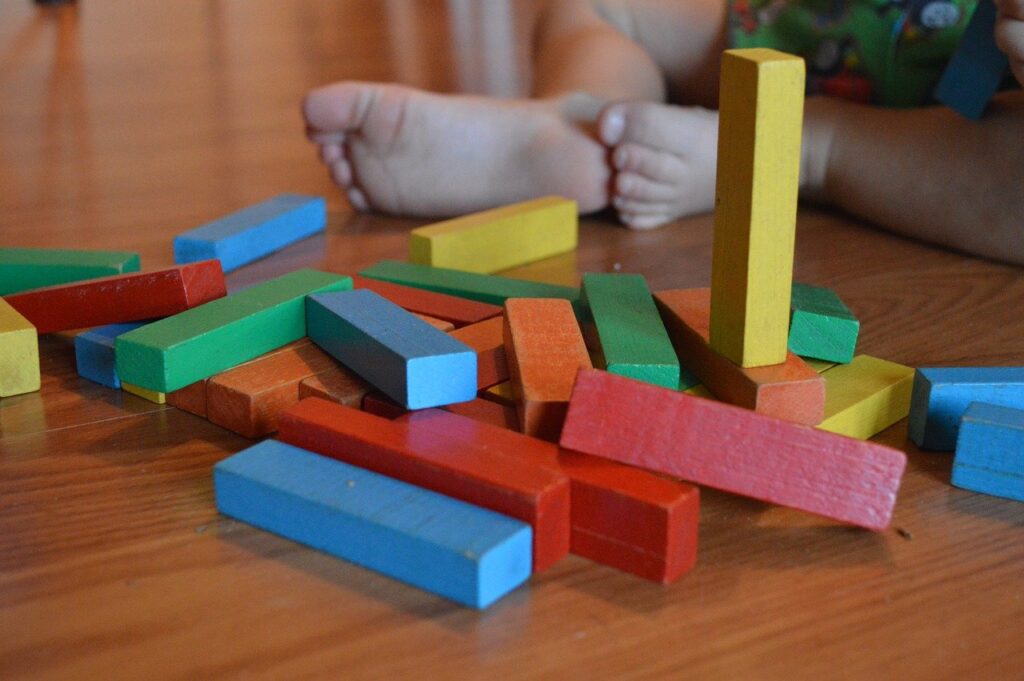
At the heart of this approach is the freedom of students to “work” with authentic Montessori materials, including a range of quality, age-appropriate materials – objects such as wooden blocks, sand trays, textured fabrics and glass beads – for as long as they desire, alone or with others. All materials are designed to be self-teaching. Children learn to solve problems and see natural connections in knowledge and therefore, expand their imaginative thinking.
“The emphasis is on work,” explains Serene. “The Montessori Method seeks to support the child in organisation, thus pretend play and opportunities to learn creatively from errors are less likely to be seen. Also, our Montessori classrooms consist of mixed age classrooms, giving students more opportunities to learn from one another.”
She adds, “We also focus on skills related to practical living as a foundation from which learning takes place, including establishing a sense of order, concentration, coordination, culture and independence. For younger children, the activities include simple tasks involved with care of self, care of plants and animals, basic motor skills and courtesy.”

At the elementary level, Montessori frames the curriculum within imaginative and unifying stories called the Five Great Lessons, designed to ignite children’s interest and excitement with a global vision of unfolding life and culture. These modules include The Story of the Universe, The Story of Life, The Coming of Humans, The Story of Communication and The Story of Numbers. The latter, for example, gets students to explore geometric concepts, including the relationship of lines; and build the decanomial, a visual of the commutative law of multiplication.
Varying Interpretations
When researching Montessori schools, parents may come across the mention of two main interpretations of the Montessori philosophy: Association Montessori Internationale (AMI) or American Montessori Society (AMS). Montessori-trained teachers should be credentialed by either of these two organisations.
AMI, established by Maria Montessori, closely adheres to the founder’s original approach. In AMS schools, teachers continue the methods developed by Dr. Montessori while bringing in outside resources, such as the use of technology and introduction of current events, to supplement the curriculum. Parents can consider which interpretation of this experiential learning system more closely aligns with their personal educational beliefs.