



Today’s children grow up surrounded by gadgets and information, making traditional textbooks seem dull. Learning English should be more than worksheets—it should become part of everyday life through play and communication.
Board games are an effective way to bring fun into learning, offering new opportunities to practise English for both parents and teachers.
Why Do Board Games Work?
Blending learning with play is not merely a trend but a natural way of acquiring knowledge. There are several reasons why board games take English lessons to the next level:
Motivation
Games always spark excitement and curiosity. When children see a goal not just in completing a task but also in winning, they take part eagerly.
Practice
New words, expressions, and grammar stick better because they are repeated in real-life
situations.
For Younger Learners
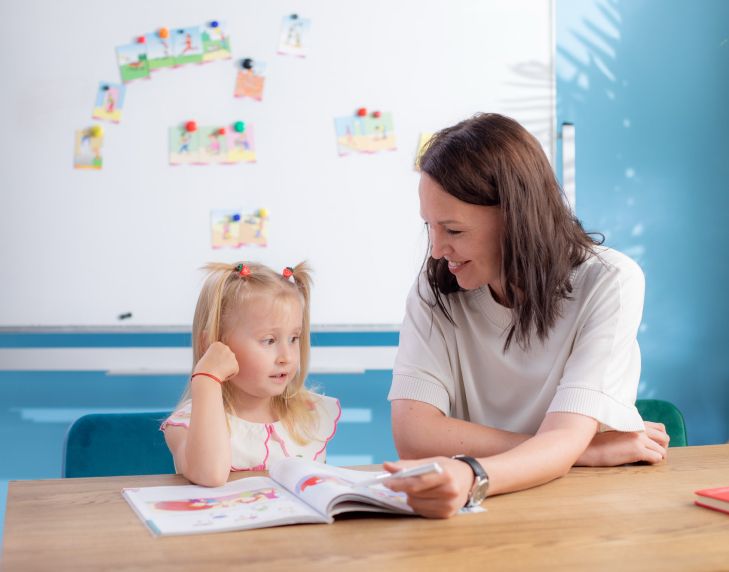
At this age, children learn best through simple, colourful and familiar topics.
- My Favourite. A classic game where children complete sentences: My favourite animalis… or My favourite colour is…. Moving around the board with a dice, they practise basicstructures and learn to talk about themselves.
- I Spy: School Days. The teacher or parent shows a picture full of objects. The task is tospot items beginning with different letters: A – apple, B – book.
For Children Aged 9–11
Primary school pupils love exploring the world, so travel- and discovery-themed games are
ideal.
- Around the World. A board journey across the globe. Children move their countersaround the board and name countries, capitals or nationalities. Tasks can be madeharder, e.g. What language do they speak in Spain?
For Teenagers (12+)

Teenagers enjoy games where they can express their own opinion, joke about or challenge others.
- Jeopardy in Reverse. Players are given an answer and must come up with the question. For example, answer: Shakespeare → Who is the most famous English playwright?
Games For Family Evenings
Board games can become a lovely family tradition. Organise an “English evening”, when everyone in the family plays in English.
- Taboo. The card has a word and “forbidden” clues. The challenge is to explain the word in English without using those clues.
- Bananagrams. Each player gets a set of letters and builds words, racing to be the quickest.
What To Keep In mind?
Level of difficulty
Choose games according to age and language ability. Tasks that are too hard discourage, while
ones that are too easy quickly bore.
Emotional Factor
A game should be enjoyable. If a child is tired or not in the mood, it’s better to postpone.
Board games are more than just entertainment. For parents, they are a chance to spend time
with their children, create warm family traditions and at the same time support language
development.
And they will help English teachers get kids interested in the subject. Remember, to get
children even more interested in learning, you can always turn to online courses for English
teachers and textbooks that will help you keep your audience’s attention.