


Teaching in international schools can be a rewarding experience for educators and students alike, as the variety of experiences and cultures coming together in a single institution makes for an interesting, creative and warm environment in which we all learn from one another. There are instances that can be frustrating in these contexts though, as not all students experience consistency in their learning. Students often transfer to our schools from other nations and institutes due to situations out of their control. This is often unavoidable as a parent, as situations arise which mean that you are forced to move, relocate for work, or perhaps financial or family situations may change.
Whatever the reason, it can often mean that the students we teach are faced with the daunting prospect of starting at a new school. This is a scary situation the world over, and in some cases is compounded by a change in location, language and culture. These are not easy things for a student to navigate through. Even if a student moves from one school to another in the same city, there may still be negative experiences and problems that they faced in the education environment, and so a positive fresh start at a new school is not as easy as first thought.
With all of these issues, it is often overlooked that these students on many occasions have had to interrupt their learning and courses as well. This is not always such a big issue with primary school students, nor the early years of secondary between the ages of 11-14 (key stage 3). However, when it comes to older students completing exam courses, this move can have a significant impact on confidence and motivation. Often in British international schools, student are not allowed to pick up where they left off with GCSEs, and are expected to repeat their first exam year (year 10) again. This can leave students frustrated and a year behind their peer group.
Often, these students are not even given the opportunity to continue the same courses from one school to another, and still must repeat year 10. As an educator, we all have a certain process for teaching exam material, and may decide to teach different modules and units at different points, so these students may be at different stages of the course compared to the other students in our classroom.
However, this does not mean it is an impossible task, it just takes some organisation and proactive study. Students at this stage of their learning should not be punished for a move in school that is not necessarily their decision; we should give them the opportunity to finish what they have started. Similarly, for those who did not achieve the GCSEs they required at the end of year 11, should they not be given ample opportunities for a second chance?
I spent seven years in the UK teaching and perfecting one year GCSE and A level programmes for academic success. There is no reason why a student who has begun a course cannot complete their GCSEs in a single year somewhere else. In most cases students are able to pick up brand new subjects and are still able to achieve top grades. So why is this not widely offered in international schools?
Quite simply, international schools are businesses, and with the natural movement of students from school to school and country to country, setting a precedence for one year GCSEs means that they would miss out on one year’s worth of fees. However, it’s not all about the money; it is also compounded by the fact that schools do not wish to risk taking on a student for a year if they might not achieve well. As educators we obviously have an obligation to ensure students will thrive under our guidance, so it not surprising that schools are reluctant to offer such courses.
So how can students be successful in a one year GCSE programme? Quite simply, it comes down to a number of factors that have to marry together: student age, classroom environment, student-teacher relationships, class size, and a student’s attitude to learning. These factors have to be conducive for students to achieve well in one year courses.
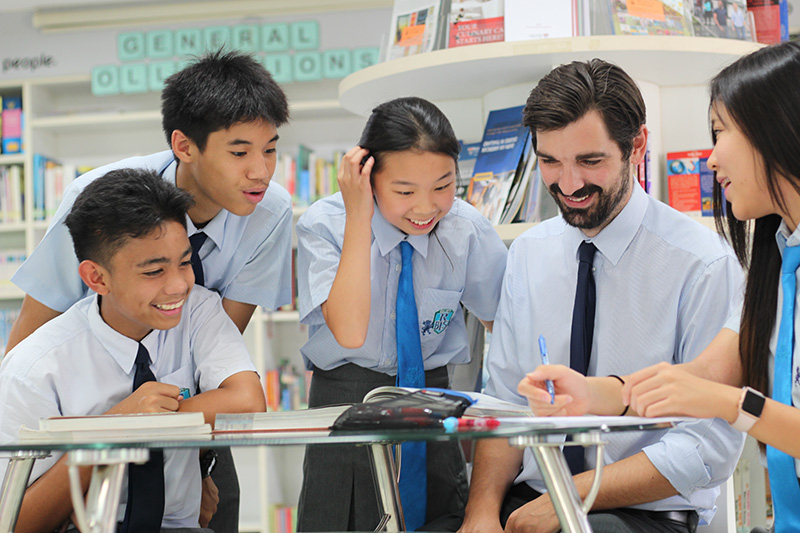
It is not easy for a growing international school to manage one year GCSE programmes as these factors are usually not feasible in the context of a large school. Ideally, class sizes should be small with no more than 10-12 students as a maximum, so that students are able to get a good amount of 1-2-1 attention from the teacher, who is able to discern a student’s gaps in knowledge. The teacher – student relationship is also paramount, as a student must be able to trust their mentor and be confident in asking for help. Listening to the teacher’s advice is ultimately the best way to reach exam success.
My children are very young and starting their primary education this August. I am always conscious that as an international educator my career may take me to different locations and interrupt their time at school. I hope that as the years go by I am able to avoid disruption to their exam years and they can reach their personal targets. If, however, their exams are impacted by a change in my circumstances, I will keep my fingers crossed that their future school is able to see past policy and grant them the chance they deserve: to finish what they started.
Register your email address here and we’ll notify you when new articles get uploaded.